Post-earthquake Renovation of Cultural Heritage
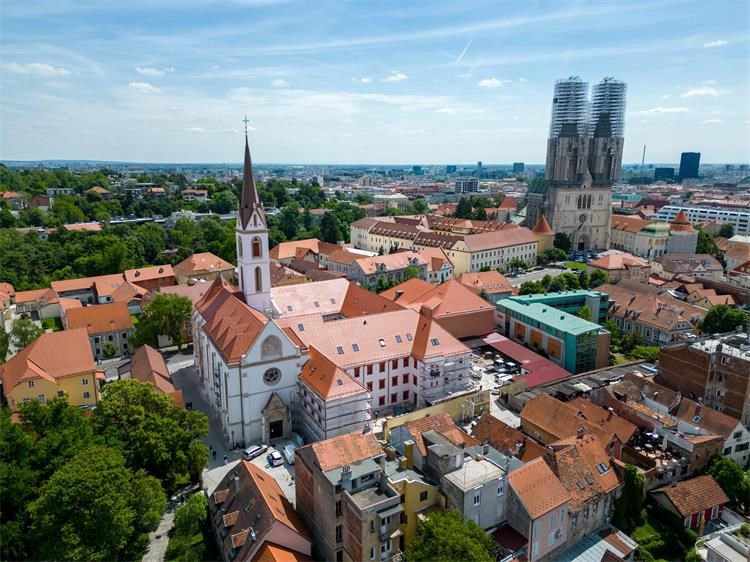
FOTO: Petar Krajačić Vilović
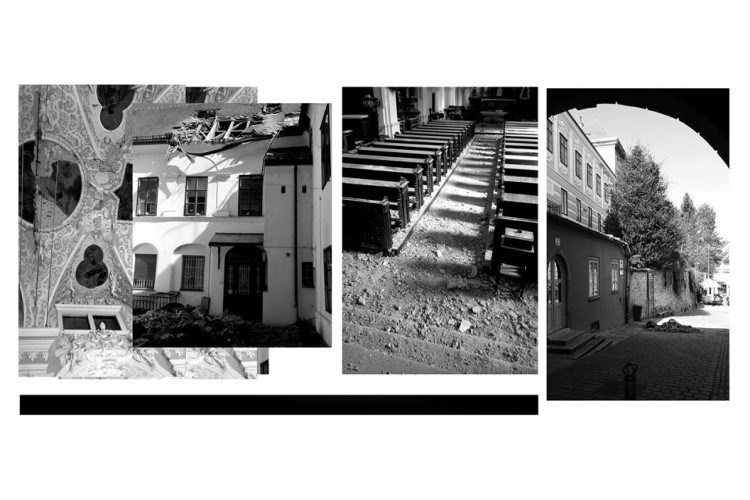
The devastating earthquakes that struck Croatia in March and December 2020 caused extensive material damage to tens of thousands of buildings, countless cultural properties, their architectural fittings and decorative elements, as well as collections and inventories listed as cultural heritage. Some of the most valuable monuments of the cultural heritage of central Croatia have been among the most severely damaged objects.
The first strong earthquake (5.5 on the Richter scale), with its epicentre in the Markuševec area, which affected the City of Zagreb most severely, struck on 22 March 2020. It caused damage to buildings within the cultural and historical area of Zagreb, as well as to buildings listed as singular entities. The oldest and most valuable examples of cultural heritage in the historic city centre were struck most severely and suffered the hardest damage, as well as the parts of Zagreb built after the 1880 earthquake. Less severe damage was also recorded on cultural heritage in the areas of Zagreb County and Krapina-Zagorje County.
The second earthquake that struck the Petrinja area (6.4 on the Richter scale) on 29 December 2020, affected Sisak-Moslavina County most severely. However, substantial damage was recorded in a total of eight counties, along with numerous progressive damages caused in Zagreb.
The earthquakes struck Croatia at a time when movement restrictions and strict measures were introduced in order to prevent the COVID-19 spread. This increased the dangers and obstacles that citizens and all emergency response units had to deal with. These stakeholders included Civil Protection, Public Fire Brigades, the Croatian Mountain Rescue Service (HGSS), staff of all emergency services, as well as employees of the Ministry of Culture and Media, conservation departments, the City Institute for the Protection of Cultural and Natural Monuments of the City of Zagreb, the Croatian Conservation Institute, and the Croatian Centre for Earthquake Engineering, who were mobilised to carry out the inventory and assessment of damage and to define urgent protective measures for cultural heritage.
|
|
|

|
|
Petrinja earthquake - projects |

Immediately after the Zagreb earthquake, our conservation services were present in the field inspecting the damage caused on cultural heritage. Conservators from all over Croatia were engaged in making the inventory of damages to cultural property. Urgent shoring was carried out on the most endangered buildings, as well as full and partial evacuation or in situ protection of their movable inventories. These activities were joined by international organisations and foundations either directly or through donations.
Based on the expert damage assessment and the adopted document titled Rapid Damage and Needs Assessment, with the support of the World Bank, the Ministry of Culture and Media designed and implemented a Call to action on protection measures for cultural heritage damaged in the 22 March 2020 earthquake in the area of the City of Zagreb, Krapina-Zagorje County and Zagreb County. This call to action made it possible to draw funds from the European Union Solidarity Fund for 155 projects, which covered 140 buildings and 15 movable properties.
After the Petrinja earthquake, all procedures related to the earthquake damage inventory and the implementation of urgent measures were repeated. Additionally, a new call to action was announced, used for financing of post-earthquake renovation of 136 buildings. During the implementation period of the Fund, another call to action for a simple direct award was carried out and it referred to both earthquakes. This call to action was as the basis to contract additional 78 smaller projects. The implementation of the remaining projects was contracted and financed through the State Budget funds.
Funds from the EU Solidarity Fund were used for the following purposes:
- Implementation of urgent protective measures,
- Preparation of the relevant project documentation,
- Structural renovation works on immovable cultural property,
- Urgent protective measures and establishment of temporary storage facilities for movable cultural property.
The Ministry of Culture and Media assumed the task of the implementation of urgent measures or the post-earthquake renovation of cultural heritage buildings:
- Cultural institutions founded by the Republic of Croatia (museums, theatres, libraries, archives etc.),
- Buildings owned by the Republic of Croatia (ministries, courts, police administrations etc.),
- Cultural institutions founded by the City of Zagreb and other cities and counties (museums, libraries, theatres),
- Buildings of the Zagreb City administration and of other cities and counties’ administration,
- All religious facilities (churches, monasteries etc.),
- All Croatian Academy of Sciences and Arts (palaces, museums etc.),
- 26 individually protected houses in the centre of Petrinja.
Data on the post-earthquake renovation as of December 2025:
- The Ministry of Culture and Media carried out structural renovation or urgent measures on 511 buildings and 15 movable inventories,
- Post-earthquake renovation has been completed on 300 buildings.
Through the Ministry of Culture and Media the following total amounts have been allocated so far:
- EUR 487 million from the EU Solidarity Fund,
- EUR 323 million from the State Budget,
- EUR 763 million from the National Recovery and Resilience Plan (of which EUR 169 million have been paid out).
The first phase of post-earthquake renovation of the damaged cultural property included the structural rehabilitation and renovation, as the basis for their preservation, by achieving the required level of seismic resilience of the structure. The works were preceded by the preparation of the relevant project documentation. Additionally, prior to and alongside the necessary interventions, all required conservation, restoration and archaeological research was carried out. The continuation of the complete renovation works on the building of the local administration as well as cultural institutions has been provided within the framework of the National Recovery and Resilience Plan. The ongoing post-earthquake renovation of religious buildings has been financed through State Budget funds.